Sunday, 3 March 2013

THE CHILDREN'S FILM FOUNDATION COLLECTION: The Race is On (1957-78)


The BFI’s laudable mission to preserve some of the best examples from the wide selection of independent features, produced in the UK under the Children’s Film Foundation banner from the mid-1950s onwards, continues with this second volume in the proposed series of individual DVD issues, which will be grouping together three films from each decade of the CFF’s thirty year-long history around a specific related theme or topic. This volume follows up on last year’s collection of urban adventure stories (released under the broad, and fairly inclusive title, London Tales) with a trio of films about competition and childhood -- featuring plucky, inquisitive, outdoorsy youngsters who are shown using their drive and industriousness to create or modify various contraptions capable of being raced, with the ultimate aim of entering into competitive endeavours and emerging from them victorious … but still with an appreciation for the importance of moral qualities such as decency and fair play, of course! Together, the three films which come under consideration in Volume Two – collected under the title The Race is On -- span the 1950s, ‘60s and ‘70s, and in doing so also incidentally highlight the changing face of postwar Britain (or more specifically, England) during the same period, up to around the late-seventies.

Setting these works side by side helps to turn each one of the films into fascinating social documents in their own right, charting not only the transformations in the landscape and layout of modern cities & towns and their surrounding suburbs across three decades, but also revealing subtle shifts in the imaginative role played by the concept of childhood itself which is a construct presented here by a series of writers and directors for a particular popular form of pictorial children’s fiction which was always intended to be seen by a wide audience made up of varying age groups. Relationships with parents and authority figures, and attitudes to play and competitiveness are seen to evolve as the focus shifts from implicitly middleclass values in the black-and-white era to a more socially inclusive and regional, mullti-racial outlook by the start of the eighties, while the core aims of the CFF are broadly adhered to throughout.


The Children’s Film Foundation was first created by the Odeon and Gaumont cinema chain owner J. Arthur Rank in 1951 using money from the Government’s British cinema ticket tax known as The Eady Levy, with the intention of providing good, clean wholesome fun for younger audiences, in a period when the egalitarianism which had been recently introduced into British society during the war years, vied with still lingering respect for social hierarchy and all the deference, restraint and conformity such traditionalism seemed still to guarantee. As David Kynaston writes in Family Britain: 1951 -57 children were still thought of very much as trainee adults in the mid-1950s, but an emerging youth culture and the rise of the teenager was contributing to a public perception that delinquency was increasing its hold on the nation’s young, with all sorts of bad influences competing to corrupt from afar – most of them, it seemed, American.
 
The CFF’s programme, headed by respected producer Mary Field who was appointed Chief Executive of the Foundation by Rank (the organisation's self-appointed Chairman), came of age when Saturday morning picture clubs for children were still a commonplace, and, as Vic Pratt writes in the accompanying booklet for this BFI release, ‘a house with a flickery, black-and-white television set was still a novelty’. These weekly matinee screenings offered a broad diet of continuing weekly serials, American Westerns, comedy shows and old cartoons. It was clearly the intention of the CFF to counter the perceived alien-ness of the American influence with a home-grown form of drama that exemplified more culturally innate values, practices and beliefs. Nevertheless, modern viewers of the first of these films might find themselves in for a bit of a shock, especially if they are parents: while writer and director Darcy Conyers’ wonderful film Soapbox Derby (1957) – made by the independent production company Rayant Pictures Limited – aims to depict an excitable group of 1950s twelve &thirteen year olds learning about responsibility, hard work, passion, commitment and endeavour, it also suggests an ideal of boyhood that is marked by a remarkably boisterous, rough & tumble attitude to life that demands a certain amount of everyday knocks and scraps, quite often risking injury as part of the natural growing up process that is necessary as part of learning from experience. The film concocts an representaton of childhood that seems like it’s a million miles away from our own far more protective and paranoid ideas about what constitutes an appropriate level of risk for children to be exposed to, despite the lost world of structured, adult-conceived and-approved organised hobbies and past-times the film portrays as being the norm. Girls, on the other hand, of course, are much more flighty beings: unpredictable, scatty little things, requiring constant looking out for.
 
The story revolves around the rivalry that exists between two youthful South London gangs of schoolboys, but is cleverly organised into a narrative form suggesting the structure of a wartime industrial espionage adventure. One of the gangs, The Battersea Bats, is led by Peter (the fifteen-year-old Michael Crawford): he’s an earnest but energetic, tousle-haired blonde lad who organises his members around the need to honour their gang with undivided loyalty, solemnly insisting they swear a pledge to always protect its secrets -- the latest of which is a plan for the Bats to make their own racing Go Kart in time to enter the heats for the upcoming Soapbox Grand Prix.


The members of the rival gang, The Victoria Victors, seem to prefer to spend most of their time snooping around their enemies’ ‘secret’ headquarters: the innards of an disintegrating, derelict haulage crane, once used to supply Battersea Power Station, whose chimney flues can still be seen here, belching smoke in the background of shot from across the Thames. Trying to find out what their enemies are up to is seemingly their only Raison d'être , but it's an activity which results in the first of many skirmishes breaking out between the two rivals near the beginning of the picture. In the seventies, kids in children’s films who recklessly played about and fought each other -- like this bunch do -- in an abandoned dockyard full of empty warehouses, surrounded by piles of bricks, unstable coal slag, rusting cranes and bits of old digger machines, long since discarded among abandoned coal carts and train waggons, would probably be expected to suffer dire consequences as an warning to any young viewers watching not to copy such an example. This safety conscious attitude can be seen in some of the later CFF films -- and it’s an outlook we’ve certainly inherited today. Here though, when a member of the Victoria Victors drops in on the Bats while they’re discussing their plans for the up-coming race, it kicks off a bout of energetic fisticuffs outside The Battersea Bats secret base, involving much dangerous-looking activity taking place amongst surroundings that look like a veritable death trap for small boys. Yet the whole sequence is scored by composer John Wooldridge with perky, frivolous brass cues and directed to appear like an appealing, exciting and enthralling piece of action rather than an ominous prelude to a serious accident. The general tone suggests that this sort of thing is all good-spirited roustabout behaviour that one should expect from healthy young lads. This despite the punch-up ending with one of the Victoria Victors’ members falling off the embankment wall into the Thames (actually he’s clearly pushed in by his opponent!) and consequently having to be rescued by Peter and the local Watchman -- a rosy-cheeked old duffer who turns out to be the Grandpa of one of the other Battersea bunch’s key members (Mark Daly – his last screen credit after a career made up of playing innumerable amiable old timers),  who scurries to the rescue brandishing an inflatable rubber ring.


All this ‘robust’ boyish activity may be of a character that is considerably riskier and more violent than the kind today’s children’s fiction seems inclined to sanction, but amid the chaos of baggy-shorted kids shown whacking each other full in the face then hurling one another over each other’s shoulders, there are some good honest values still to be imparted along the lines of what should constitute fair play in pitched boy gang battles: when a new, recently inducted member of The Battersea Bats called Lew Lender (Alan Coleshill) indulges in unsporting behaviour during the fight and gives one of the Victorias and unconscionable kick in the thigh when he’s already down on the ground and thus unable to defend himself, his own gang reject him for “dirty fighting” and cast him -- with a slap and a kick -- out of the group despite the fact that is dad would have been able to supply them with spair parts for their Go-Kart, while Grandpa Johnson gives the dripping gang rival, seen earlier cast into the Thames, a lift back to his house in his bubble car (which even gets a mention in the title credits as ‘Isetta of Great Britain Ltd’) while his enemies , the battle for today now over, happily wave him off.
 
The film continues by contrasting the values of fair play and healthy outdoorsy work and industry as exhibited by the Bats, with the dishonest, lazy, bullying, short-cut taking tactics displayed by the Victorias and the now displaced Lender, who straight away commits the ultimate sin of betraying his former allies’ secrets to his new gang by telling them about The Battersea Bats' plan to enter the Soapbox race. The current leader of the Victoria Victors (with the Alex James floppy fringe) rather finds himself playing second fiddle to Lender from then on, once the gang decides that they too must enter the same race in order to make sure their greatest rivals don’t win it: as previously mentioned, it turns out that Lew Lender’s dad runs a contractors business and so has ready access to all the materials the gang could ever need for making their own Go-Kart, with very little effort actually being needed from them in order to get the thing built. The bullish Mr Lender (Denis Shaw -- a familiar character actor face from the sixties, who would often pop up in assorted village taverns for no end of Hammer Horror outings during the period) simply plonks all the spare parts they’ll require in a heap on the ground in his junk yard and expects them to get on with it. Meanwhile, the Bats together illustrate a set of qualities in their efforts to prosper which are considered, in marked contrast to the mean-spirited and skimpy attitude displayed by their rivals, to be praiseworthy and positive virtues: between them the trio stand for a hearty form of enthusiasm channelled into organisational skill, careful planning and the ability to problem solve, ennobled by sheer hard graft that’s made to look enjoyable by embodying a fraternal spirit of pull-together team work.


The Battersea Bats’ three members divide neatly into certain character ‘types’, possessing a portion each of the positive qualities that are so vital to this race to make a successful vehicle from scratch. Michael Crawford was only around fifteen when he starred in this film, one of his earliest screen roles. His character, Peter, is clearly the leader of the bunch -- a freckle-faced group captain in knee-length shorts, coming up with the plans, enforcing the pledge to secrecy and spurring on his troops to stick with it when the going gets tough, although there is a potentially negative aspect to his character which comes out later on. Crawford’s future prowess at physical stunt work is already in evidence here as he -- along with several of the other boys, it has to be said -- is allowed to perform some remarkably hazardous-looking activities in front of the camera that would most definitely be frowned upon these days, further bringing home the point that ideas about what childhood play could justifiably entail have since become less tolerant of avoidable danger across the intervening decades. Peter comes up with “Operation Scrounge” – the plan to find all the bits and pieces the gang will need to create their Go Kart by begging and scrimping; while saving their limited funds to spend on the all-important wheels - which will need to be bought direct from the race organisers to make sure they come up to scratch.
 
 
The brains and planning behind the actual design for the vehicle belong to Bats founder member Foureyes Fulton (Roy Townsend – according to IMDb, this was his only acting gig), whose intellect proves him adept at piecing together a set of plans at home that will make an efficient, fast-moving machine, after he secures some cranks and a three-speed gear from a cyclist neighbour who promises to look in his shed for some spares. Foureyes (even his little sister refers to him by this politically incorrect nickname), is the most like a mini adult of the three protagonists, dressing in a little tweed suit and tie and looking like a slightly dishevelled miniature Charles Hawtrey in his bottle-top spectacles.

Finally Legs Johnson (Keith Davis) is the brawn of the gang: a toothy, thick thighed lad with an untidy ‘pudding bowl’ haircut who’s the other boys’ choice to drive the vehicle in the tests, the heats, and the final should they get that far. The film chronicles the Bats’ endeavours as they work to secure the nuts and bolts they’ll need for the build; as well as the steering wheel, wire cables and aluminium sheeting (which are all acquired from a car breakers’ yard) -- and then shows them diligently coming together back at base to realise Foureyes’ brilliant plans. They encounter problems during the construction that require a re-think of the whole design, but eventually the gang end up with a working vehicle that they can test out at the local park. All of this character-forming hard work and responsible, committed action is shown to be in marked contrast to the methods of the Victoria Victors, who quickly cobble together an unwieldy-looking beast without any proper planning, and are merely relying on materials supplied by Lew’s dad, who himself displays an unhelpful and unsporting attitude which has clearly rubbed off on his yobbish son. led by Lew Lender, the Victorias spy on the Bats’ test run in the park from behind bushes and plot sabotage and then theft of Foureyes’ secret design sketches, which are hidden in the living room clock cabinet in his house.

While all the boys in both groups are always characterised and defined by their engagement in projects that involve energetically doing things – for good or for ill -- planning, thinking, or performing tasks or activities, the presentation of female characters is a different thing altogether. The only girl given any active role in the story is Foureyes’ younger sister Betty (Carla Challoner), who is introduced to us as a slightly clumsy, ditsy creature obsessed with her favourite toy doll, Maureen. Unusually, the boys of The Battersea Bats are more tolerant of her than boys in CFF films usually are of girls, even willingly allowing her to come along to their test trial in the park when Foureyes’ mum Mrs Fulton (Jean Ireland) tells them that they have to look after her for the day. Betty is clearly intended as comic relief, but that comedy is derived from contrasting her muddled fluff-headedness with the boys’ diligent, purposeful action so that, for example, we have scenes in which the lads might be hunched over the dining room table examining Foureyes’ car design, or out at the park testing the vehicle, while Betty is always pictured in the background of shot either talking nonsense to her doll and falling over furniture, or skipping smilingly behind the test cart in the park while Legs Johnson is concentrating on the steering.
The girl is clearly also being set up as a potential weak link in the gang’s armour, who might accidently blab their secrets to the other side. In actual fact, we’re also being encouraged to feel protective towards her; it is part of the same construction of responsible boyhood being promoted in the film, to see girls as cute, docile and inherently domestic. While the boys’ hobbyist’ pursuits are categorised as a means of a play-form of acquiring necessary experience of the complexities of adult life, a girl is merely a pleasant diversion from the stresses and strains of work, an adornment that has to be cared for as part of the male’s inherited societal responsibility, but who plays no active part in the shaping of events. That’s why Lew’s actions towards her ultimately make him the unredeemable bad guy of the film when he breaks into the Fultons’ house, rifles through their living room drawers and cupboards to look for the plans in front of a bemused Betty, then tricks the girl into giving up their location – threatening to smash her doll Maureen if she tells on him. Lew’s actions inadvertently cause a life-threatening accident involving Betty, and a rift between the Bats lads after Peter sees Lew looking at the stolen plans in the street and hastily draws the wrong conclusion that Foureyes has betrayed the gang, cornering his chief designer on his doorstep and accusing him: ‘you’ve given away our secrets – that’s what matters! You deserve to be chucked out of the gang!’ Peter’s lack of trust provides Lew (under guidance from his unscrupulous father, who has clearly brought the lad up as a wrong ‘un) the chance of recruiting Foureyes to the Victoria Victors for real, since the gentle bespectacled lad  is unaware of Lew’s culpability in Betty’s accident and that it was he who originally stole the plans from his house. Lew tricks Foureyes into feeling an obligation to help the Victorias by offering to help him to pay for a new doll for Betty as a replacement for the destroyed Maureen – the doll being the ultimate symbol of the boys’ failure to protect their giggly pig-tailed mascot, who now lies injured in hospital.


While the children in the story are always the prime movers in generating action and moving the plot forward, adults are presented as benign but passive authority figures, mostly kept in the background. They set parameters for the youngsters but are not really part of their world. Thus Mrs Fulton unknowingly makes a suggestion that undermines Foureyes’ status within the group when she offers his old pram wheels for the Go-Kart (‘Oh mummy! This is a proper racing car!’) and treats the project like a child’s fancy rather than a serious endeavour. Other adults offer their help in various ways but don’t view the boys’ efforts as being particularly worthy of serious consideration. The only real exceptions to this rule are Legs’ Grandpa and Mr Lender, each of whom behaves more like an overgrown schoolboy than the heroes themselves: Grandpa Johnson provides bubble car transport and causes chaos through his inability to reverse properly, while the childish bully Mr Lender is so invested in his son coming out on top that he even takes part in fights against Lew’s young opponents! And if one thought the opening dockside punch-up was promoting dangerous activity then just look at what these supposed adults get up to after Mr Lender encourages his son to steal the Bats’ Go Kart when it trounces their effort in the Stage One heats, helping Lew out with a plan to throw it into the Thames! When they’re disturbed before they can dispose of it, the father & son villains load it onto the back of Mr Lender’s truck instead and take it to a sand pit to be buried. The resultant climactic punch-up before the racing finale would’ve got both Grandpa Johnson and Mr Lender locked up for quite a while for their part in it, and their encouragement of some very reckless activity on a dangerous work site!


The final act contrives to have Peter being forced to replace Legs as driver in the racing face-off between The Battersea Bats and the Victoria Victors, while Foureyes ends up taking control of the rival’s contraption (after Lew earlier predictably cheated to earn the gang’s place in the final -- but has since been ‘detained’ at the sand pit showdown). The end of the film has Betty make a recovery just in time to reveal all and bring about a reconciliation between Peter and her brother, before Lew and Mr Lender are ritually humiliated in the traditional CFF chase scene climaxing with the bad guys slipping and falling over in some mud, while the rest of the cast stand aside pointing and laughing at their plight!
Like most of the CFF’s output, almost all of the action is shot on location, affording lots of glimpses of a changing London: the gritty black-and-white photography captures collier boats steaming across the Thames, supplying a smoking Battersea Power Station; crowed pedestrian streets and marketplaces full of now-unfamiliar store names display late 1950s London and its contemporary traffic in all its authentic glory; while clean-looking new build, identikit terraced housing provides the setting for the Fultons’ neat house with its flock wallpaper and 14” Bush TV set in the corner.
Come 1967, the earthy black-and-white grittiness of Soapbox Derby has been exchanged for glorious colour, and city locations for green and leafy English suburbia in the equally enchanting The Sky-Bike. This is a slightly more whimsical picture about a boy called Tom Smith (Spencer Shires) who loves flight and dreams of nothing but being able to fly. Literally: his bedroom wall is plastered with pictures of planes and flying contraptions and he has an out-of-body-experience while he sleeps as the film’s chirpy sing-along title number by Frank Goodwin and Harry Robinson pounds out, in which he dreams of his spirit rising and leaving his sleeping body and flying out of the window at night. The boy spends most of his time daydreaming and walks about imagining himself as a pilot receiving instructions from ground control – to the extent that he ends up in a heap at the bottom of the stairs when he gets up in the morning after fantasising that he’d be able to sail down to breakfast using his dad’s umbrella, Mary Poppins style.


Tom has a best mate called Bill (nicknamed Porker because he’s slightly on the chunky side, played by Ian Ellis) and goes for bike rides at an old abandoned airfield with him and his sister Daphne (Della Rands). But when he encounters an eccentric old man called Mr Lovejoy (who turns out to be the local funeral director, Mr Graves – geddit?) while out on a solitary ride with only his fantasies of flight for company, he gets drawn into the old man’s quest to build a foot-peddled flying contraption for a local competition run by the aeronautics society, that’s aiming to find the first person who can build and fly such a device in a figure-of-eight pattern, unaided by a motorised engine. Lovejoy’s flying machine is built from an old tandem bicycle fitted with flapping wings, and is clearly an unworkable Heath Robinson contraption; but Tom names it the Sky-Bike and commits to helping the old man (Liam Redmond, Night of the Demon, 1958) perfect the impossible machine, even creeping out at night to work on it in the shed at the airfield where it’s secretly being kept, and emerging in the early hours of the morning on the day his family is meant to be going on their holidays, too tired to stay awake during the car journey as his good natured, pipe-smoking dad attempts to point out local sights of interest: ‘kids these days just aren’t interested in anything anymore,’ bemoans Mr Smith (William Lucas).
 
The Sky-Bike conjures up a blissful, nostalgic world of endless blue sky summer holidays where birds chirp melodiously in bucolic country lanes and the red telephone boxes gleam bright and new in the sun which blazes down from cloudless skies onto the crunchy gravel driveways and freshly cut park lawns of sixties suburbia. Whereas Soapbox Derby was a down to earth, to some extent realistic, portrayal of boys coming of age and entering into the values of a middleclass adult world of responsibility and fair play (unlike the shifty working class Lender clan and their ilk), this film presents a protagonist who is more of a dreamer, and who lives in his own head half the time, and who  worries and annoys his mum (Ellen McIntosh) because he’s always late home for tea and forgets to run simple errands through being so caught up in his fantasy world of play (he gets sent to the library to return a book but gets so engrossed in searching for Mr Lovejoy’s address in the Records Department that he ends up coming back with it still secured to the back of his bike!).
Tom’s obsessions bind him to the eccentric pursuits of Mr Lovejoy, who is clearly too old and out of puff to get his flying contraption off the ground, despite his unending enthusiasm. Nevertheless, the film essays a version of essentially the same plot seen in the previous 1950s film, in which the couple’s commitment and effort literally see their dreams come true when the ramshackle device does somehow gain the ability to fly (giving the story a magical, much more fantastical quality than its predecessor); but the duo then have to contend with sabotage and kidnap from a jealous rival group who have also entered the same competition and have been using the same strip of ground to test their much more sophisticated machine.
Once again, the rivals are a wealthy bunch of authority figures that include David Lodge as a ‘little Hitler-ish’ airfield guard, Bill Shine as upper crust busybody Wingco, and Guy Standeven as a stiff-lipped squadron leader who has a WW1 fighter plane in tow for creating a slipstream to help his team’s device get off the ground. Just as we saw in the first film of this set, the rival competitors are not content with this kind of flagrant cheating to ensure they win, they also trick a disgruntled Porker (angry about being left out of Tom and Mr Lovejoy’s secret plans) into giving away the location of the Sky-Bike, which they then smash up, for good measure abducting Mr Lovejoy as well -- just to make sure he won’t be competing with them -- and leaving him bound, gagged and locked up in a public convenience while they prepare to make their bid to snatch the competition prize.
 
The thrust of this version of the same narrative becomes about Tom’s world of apparently unrealisable fantasy being made the reality. Initially, all adults apart from Mr Lovejoy (and by implication the rival competitive group) are out of the loop with regard to the existence of the Sky-Bike and Tom’s involvement in the competition, but after the machine is destroyed, everybody in Tom’s life is drawn into coming together to make the impossible happen. Daphne, as the only girl in the film, is naturally tasked with sowing the shredded ‘wings’ back together and Tom’s mum and dad are there for support when Porker comes to his senses, realises he’s been used by the others, and reveals the whereabouts of the kidnapped Lovejoy. It ends up being Tom and Porker who take to the skies in pursuit of their competitors’ craft when the old man admits that he’s too old to take part, and the race becomes an enjoyable fantasy spectacle of impossible flight as cumbersome peddle bikes with flapping wings vie for control for the skies in what is a charming, easy going tale made  that much more watchable thanks to some gorgeous photography courtesy of Straw Dogs and Witchfinder General cinematographer John Coquillon and some artful direction by The Cruel Sea director Charles Fend, who injects some of that late-sixties ITC drama feel into the pacing, having worked on so many episodes of such dramas, including Danger Man and Man in a Suitcase before helming this -- his last directorial work. And very fine it is too.

Jeremy Summers is even more of a name to be reckoned with when considering adventure TV and film series of the 1960s and 1970s: numerous episodes of Danger Man, The Saint, Randall and Hopkirk (Deceased), Jason King, UFO and The Protectors stand out in his filmography, while in the ‘80s and ‘90s everything from All Creatures Great and Small and Tenko to Howard’s Way and Hollyoaks, Brookside and The Bill mark Summers down as one of the most ubiquitous directors to have worked in British TV. He also directed Tony Hancock in the film The Punch and Judy Man (1963) and Christopher Lee in The Vengeance of Fu Manchu (1967).
The CFF film Sammy’s Super T-Shirt (1978) sits respectably in the middle of this list, having become one of the most popular and affectionately remembered of the entire Foundation series. The film builds on the fantasy elements essayed in The Sky-Bike but there had clearly been a shift in tone by the late-seventies. Now young Sammy Smith (Reggie Winch) is a cockney rather than an impeccably middleclass young chap, and his best friend Marv (Lawrie Mark) is of West Indian origin. Although filmed in leafy Surrey, the skies are perpetually overcast and grey and the surroundings mainly redolent of brick and concrete, with dull patches of overgrown urban field and the local cinder athletics track being the main focus of play. The film was written by Frank Goodwin and Harry Robertson who, you may have noticed, provided the upbeat theme song for The Sky-Bike. Godwin also produced this film for the Foundation and Robertson again provides a catchy sing-along theme song for it, which is even more chipper than the previous effort, helping to establish the broader tone of fantasy comedy the film will deal in and which had become the vogue by this period in the CFF’s history. Sammy’s Super T-Shirt is essentially a charming, knockabout parody of the popular American TV series The Six Million Dollar Man, which ran from 1973 to 1978 and was a big hit in the UK with a young male pre-secondary school age group. The central premise involves young Sammy gaining super powers after his T-Shirt is accidently made the subject of a special research programme that gives its wearer extraordinary strength and speed. It succeeds largely on the excellence of its perfectly chosen cast of British character actors who bring perfect, nuanced comic performance skills to abet the likable personalities of the two child leads.


The film opens in such a way as to suggest Sammy Smith is the only child of a one parent family, although the narrative is never so heavy handed as to make this an overt theme of the piece. It is notable though that we never see a male presence in the home, as we certainly do in the other two films of this collection. Instead, Sammy’s rather small and prosaic, two-up, two down terrace is run solely by his harassed mum, played nimbly in a handful of scenes by Carry On series veteran and comedy actress Patsy Rowlands. Sammy’s concerns and obsessions revolve around physical fitness. We see him in the first scene of the film ‘working out’ with a bull worker chest expander while listening to a self-motivation body-building course of cassette tapes on his portable tape recorder. We can’t help but notice that every wall of the bedroom is plastered with posters of male role models, famous at that time during the 1970s for promoting a masculinity defined by sporting prowess and/or physical excellence: figures such as Barry Sheen, James Hunt, Sebastian Coe and numerous footballing heroes and, with pride of place on the inside door of the room, the fictional character of Steve Austin, as played by Lee Majors in The Six Million Dollar Man series. This again suggests a child overcompensating for a lack of a male presence in the home by focusing on these popular male heroes and consequently taking an excessive interest in building up his puny frame and increasing his running speed in time to compete in a local long distance track race being organised in his area for the local children.
 
Sammy’s diminished size and weedy frame make him perfect fodder for the local bad lad bully boys, Big Sid (David Young) and Chalky (Keith Jayne), who pick on him and goad him in the street by stripping him of his favourite ‘lucky’ T-shirt – an ordinary white one with a transfer of a tiger on it, outlined in black – and tossing it through the window of what turns out to be a gated research laboratory where Professor Trotter (Julian Holloway) is busy conducting molecular experiments on a pile of old clothes aimed at creating an indestructible, flame-proof material. Sammy and Marvin are denied access to the premises by an officious Jobsworth gateman played by Hammer veteran Michael Ripper, but manage to sneak in using a technique Marv claims to have seen on the telly, namely crouching out of view on the other side of the research centre boss Mr Becket’s car (Becket is played by that familiar face of British paternalistic TV authority figures, Richard Vernon) as its being waved in by the suddenly ingratiating functionary.
 
The film furnishes the archaeologist of ‘70s pop culture with innumerable tiny details that add considerably to its enjoyment factor. Trotter’s first tentative success with his experiments, for example, manage to imbue a tatty David Essex T-shirt with superpowers, but it’s ascension thankfully proves short-lived (otherwise we might have had to endure a super powers face-off between Sammy’s lucky tiger T and whoever originally owned this dolorous item). However, while the Prof is out of the research lab, attempting to persuade Mr Becket of his big breakthrough, the kids sneak in to the Complex through a window, only to find that Sammy’s shirt has been placed out of reach in a high-tech cabinet, hooked up with wires and clothes pegs and surrounded by the usual beakers and tubes full of coloured smoking liquids familiar from Hammer films of the late ‘50s and ‘60s. Determined to retrieve his rightful property, Sammy perseveres in straining to reach for it but accidently sets in motion the workings of the electrical apparatus it’s enmeshed in, inadvertently blasting it with a dose of “radiation” which presages the use of some 1970’s animation effects which give the shirt a cartoony Ready Brek glow and cause the tiger transfer on the front to briefly flash a luminous red. The shirt thereafter gains amazing powers which allow it even to deflect bullets. Most of the film from then on involves the bowler hat wearing Becket and a bespectacled Holloway chasing after the two boys in order to retrieve the shirt, because they expect to make a fortune from its unique properties in the future and they want to keep the whole experiment under wraps until that time.

 
Their efforts are, of course, consistently hampered by Sammy’s newfound abilities when wearing his lucky super T-shirt, which first emerge when he rips a chunk of the research laboratory door out, along with the doorknob it’s attached to, after he and Marv get locked in the facility. The use of slow-motion to indicate the exercise of Sammy’s superpowers is a clear nod to The Six Million Dollar Man, but the distinctive sound effect which always accompanied Steve Austin’s bionic powers is replaced here by the roar of a lion. We get to delight in the former weakling now finding he can jump with ease over the factory wall, stop a speeding car dead in its tracks just by holding out one hand, and thwart the efforts of the local bullyboys Side and Chalky to steal a little lad’s football in the park (although his enthusiasm results in the ball being squashed by the time it’s returned to its rightful owner, who promptly gives Sammy an irritable kick in the shin for his troubles). Most of these feats are accompanied by some Theme from Shaft-mimicking “action” music. Sammy can’t evade his mum’s determination to see this well-worn lucky T-shirt gets a proper wash though, and this enables the bumbling Trotter and Becket to track him to the launderette (after previous attempts to nab the shirt at the training track have already failed miserably) and kidnap Sammy while his power-giving shirt is in the washing machine, later also picking up Marvin as well while he’s attempting to spring his friend from the abandoned old multi-storeyed house he’s being held in. This, of course, now jeopardises Sammy’s chances of even making it on time to take part in the imminent race which is about to be held at the race track, let alone of winning it.

 
We must pass lightly over the slightly dodgy image that’s cast by the sight of two middle-aged men being shown calling at rows of houses, pretending to be officials for a promotions company that’s offering fifty pounds to the owners of tiger T-shirts as their excuse for being allowed to root through laundry baskets-full of children’s clothes on the childs' parents’ doorsteps, before then literally abducting a small boy off the street in broad daylight and bundling him into the back of a speeding van, as being an inevitable consequence of the disjunction between the light-hearted fictional world created for this comic fantasy drama, and the somewhat less benign reality usually associated with such activities. But the boys’ subsequent escape attempts and their grown-up foes’ increasingly hapless pursuit of them along a river as Sammy “power-paddles” in a canoe, lead to plenty of good natured hijinks and comic interludes (Marv even manages to fool Trotter by scrawling a crude tiger drawing with a biro onto a white replacement T-shirt) in the ensuing extended chase scene which makes up the majority of the rest of the picture.
 
Another element of peril is introduced when it is revealed that the shirt’s altered molecular properties have become unstable, making it dangerous and its powers correspondingly unpredictable. The CFF’s perennial message, imparting the importance of fair play and self-belief, comes through in the end when Sammy manages to join the race at the track just in the nick of time using his super-speed to catch up after Big Sid trips him up at the starting line, but is thereafter forced to rely on his own determination to win and all the training and self-improvement he’d previously been engaged in before his shirt acquired its power, when the tiger shirt suddenly starts to “malfunction” and attempts to force him to run backwards, or else glues him to the spot on the track as the other competitors race towards the finish line. Marvin has to persuade his disheartened friend that he still has the inherent ability to succeed anyway, and to discard the t-shirt and carry on under his own steam.

 
Director of photography Norman Jones (a former camera operator for a host of genre films like The Blood Beast Terror, Corruption, Tower of Evil and The Fiend) lends this quirky classic its air of everyday ordinariness with his simple, straightforward location lighting, while the content remains attractively comic-book and light-hearted in tone. The younger performers all acquit themselves with an unpretentious naturalness that helps the film remain as delightful a watch today as it was back in 1978 and then in the television repeats of the 1980s which later helped it become the most requested of CFF titles.
 
All three films appear on a single dual-layered DVD disc, all with their original aspect ratios, and they have been restored in high definition from the original interpositives stored in the BFI National Archive. The 2.0 mono audio tracks generally retain some background crackle but everything possible has been done to minimise this with the available technology, and in truth it barely registers at all after the first few minutes. The films have been digitally re-mastered to remove the worst instances of ‘dirt and sparkle’ and the anamorphic transfers all look wonderful, fully preserving the original aesthetic of each film. All three features are enchantingly watchable classics. The disc comes with a small booklet with a short essay on each film, screen credits and cast lists for each film and overviews by Andrew Roberts and Vic Pratt. Here’s looking forward to volume three, scheduled for June!

Soapbox Derby (1957)/The Sky-Bike (1967)/Sammy's Super T-Shirt (1978)/Releasing Company: BFI/Genre: Children's Fiction/Format: DVD/Region: ALL/Aspect Ratio: 2x1.66:1 /1x1.85:1/Directed by Darcy Conyers/Charles Frend/Jeremy Summers/Cast: Michael Crawford/Spencer Shires/Reggie Winch


Thursday, 27 December 2012

WORLD CINEMA CLASSICS: Floating Weeds (1959)


FLOATING WEEDS_DF_2D_packshot_72dpi_v2 Yasujirô Ozu was one of the most celebrated, idiosyncratic yet -- in his day -- commercially successful filmmakers in the history of the Japanese film industry. He worked, across nearly the entirety of his movie-making career, for the Shochiku Company Limited -- the mammoth studios at which he first started out as an assistant cameraman in 1923 after failing his university exams twice. The company was founded in the late-eighteenth century, initially as a producer of live kabuki theatre; but it expanded its output to encompass movie production in the 1920s, soon abandoning the mannered stylisations and all-male yarō-kabuki conventions of traditional Japanese drama for its own version of the Hollywood star system during the silent era, which ushered in a mode of narrative expression much influenced by that which was familiar from American movies of the day, but which was still concerned with portraying the everyday lives of ordinary Japanese people. Ozu’s work is, of course, renowned for its detailed dissection of family life, which it achieves through the delicate unwrapping and laying bare of character: the novelistic, in-depth exploration of inter-generational relationships between Japanese parents and their children, growing up in a country tinged with regret for a vanishing past even as it comes to grips with modernity. His work began to develop an appeal born of the distinctive technical tropes that separated his later approach to the crafts of filming and editing from the standard visual language adhered to at that time by almost everybody else working in cinema (both in Japan and abroad) during the mid-thirties, when he made a silent film called A Story of Floating Weeds (Ukikusa monogatari) – an adaptation of a 1928 American picture called The Barker, that had been directed by George Fitzmaurice and starred Douglas Fairbanks, Jr. -- and he continued to perfect and refine his style throughout the Golden Age of Japanese cinema, creating many masterpieces that only came to the attention of  western audiences in the 1970s. But it was his late-career colour films which gave full expression to the purest manifestation of what became known as the Ozu style.

One of his very last films was a fully-fledged remake of Ukikusa monogatari, which he shot at the age of fifty-six, just a few years before he died. It was one of the few pictures he made outside the auspices of the Shockiku studio and only his third in colour. Although Ozu’s work always stuck closely to the exploration of the same handful of family-related themes and can in some ways be taken as one project, constantly retold from a variety of angles, Floating Weeds was only the second direct remake of an earlier work, coming in the wake of Good Morning, which had been a reworking of one of his first major films from 1932: A Picture-Book for Grown-Ups: I Was Born, But…. This latest remake broke new ground in many ways though, mainly related to the involvement in its production of the president of Daiei Studios, Masaichi Nagata, who backed the picture after work on it had stalled at Shochiku.

Nagata is one of the most important studio figures active during this period of Japanese filmmaking; he produced Akira Kurosawa and Kenji Mizoguchi just as they were making huge waves on the International festival circuit with Rashômon and Ugetsu Monogatari, and he put into production one of Japan’s most opulent early colour films: Teinosuke Kinugasa’s magnificent Gate of Hell, also an early example of a successful foreign export for Japan's blooming fifties film industry. Nagata’s involvement lent a similarly high profile to Floating Weeds, which required that Ozu work with a different cinematographer from his usual collaborator, Yûharu Atsuta - who beforhand had been almost Ozu’s only photographic partner and who had been instrumental in conceiving the visual look of his films since 1937.

Both men were ‘sceptical’ of the shift to colour photography in the 1950s, and had used it in as understated a way as possible on Ozu's first two colour outings at Shochiku. But now Nagata paired Ozu with Kazuo Miyagawa -- the top cinematographer at Daiei, and the man who had presided over the visuals of both Rashômon and Ugetsu Monogatari. Miyagawa also enthusiastically embraced the possibilities now opened up by the growth of colour photography, and the new collaboration between these two masters of their respective arts (the traditionalist Ozu and the embracer of modern practices Miyagawa) resulted in Floating Weeds emerging as a rich, painterly example of Ozu’s best cinema, bringing new depth and vivid clarity to the director’s spartan sense of film grammar (which had become, by this point, an extremely finely pared aesthetic), but in a way that actually emphasises its stripped down economical nature rather than “tarting it up” with unnecessary dressings ... Although Ozu wasn’t going to capitulate to that other new fifties trend: the craze for CinemaScope - preferring to stick to the traditional “picture-frame” box image familiar to the Academy Ratio - Floating Weeds was a sumptuous spectacle of a film, that nevertheless, employed its colour intelligently and systematically, in selective artistic patterns.  
 Ozu’s later films come to put increasingly less and less emphasis on the kind of overtly dramatic events that normally drive a film’s plot forward. Instead, they base their stories around the gradual delineation of the relationships between a group of central characters. The subject matter of Floating Weeds develops out of the arrival, in a small coastal port town, of a travelling troupe of theatre players led by its chief actor and employer Komajuro Arashi (Ganjiro Nakamura), during the stifling heat of the summer of 1958. There is no special effort made in the first act of the film to draw the viewer’s attention to what will be Komajuro’s importance in the tale to come: instead, for the first ten minutes, Ozu follows a set of minor characters who turn out to have little relevance to the later story, as he lays in place the dynamic governing the behaviour of the troupe – the itinerant “floating weeds” of the title – and their interactions with the inhabitants of the town. We see the distribution of pamphlets advertising the players’ forthcoming programme of traditional kabuki dramas; and the indifference this arouses in everyone but the town's children - who are more excited by the arrival of new people in this quiet, sleepy inland port than by the prospect of the ‘entertainment’ the theatre troupe has to offer. The members of the troupe themselves, lead a mundane existence between shows: arriving by ship, packed into its hold in the sweltering heat, the lead  female member (this is a modern kabuki troupe who have re-introduced women performers) chain-smoking furiously as she will be seen to do throughout most later ‘off-stage’ scenes (women smoking is a sure visual code sign for abrasiveness in Ozu’s cinema), while the male performers visit the local brothel to haggle over their choice of prostitute or else attempt to chat up the local beauties … with little success, given the evident low regard travelling theatricals are held in here, even by a poor coastal community.
 
These initial scenes provide us with an evocative sketch portrait of the community and its visitors that resonates far beyond the mere handful of sequences set before us to illustrate it. Gradually, Master Komajuro and his current mistress Sumiko (played by one of the most recognisable actresses in ‘50s Japanese cinema, Machiko Kyō) emerge as the key characters in this set-up: Komajuro assures the town theatre’s impresario (Chishû Ryû) and the players of his own troupe, that their initially poor audiences will soon pick up as the season progresses. But the signs are that the particular programme Komajuro and his players have to offer is these days considered old-fashioned, and their style of acting thought quaint and ‘hammy’. It also turns out that Komajuro is preoccupied by other interests in the area: his former mistress, the owner of a local Sake bar (Haruko Sugimura) lives here with his illegitimate son from their former relationship, Kiyoshi (Hiroshi Kawaguchi), and Komajuro hasn’t seen either of them for many years before this latest visit. Komajuro’s visits always depend on the itinerary of his troupe, and the boy doesn’t even know the true nature of his connection to a man he calls uncle and thinks of as just a friend of the family.

The film’s first hour makes fine use of the poignancy suggested by this situation, as it explores various facets of the character of each of the three main parties involved in the much older relationship. Nakamura’s comic displays of over-enthusiasm, which erupt out of his desire to engage a reticent Kiyoshi in numerous father-son bonding activities -- such as fishing or endless games of Go (which he plays because Kiyoshi is keen on the game, not because he has any particular aptitude for it); his need for excuses to spend his free time with the boy, while being anxious to maintain the secrecy that surrounds their relationship and not reveal who he really is to his son, makes for a gentle, relaxed form of humour, etched with regret. Contrasting the precariousness of theatre life via the troupe’s dependency on achieving a certain degree of popular success with its show in order to enable Komajuro to earn enough money to be able to afford to move on to the next town, lest his performers become “stranded” in one place, and setting that situation next to the ‘master’s’ desire also to experience a simulacrum of settled family life, but still always with the option of one day moving on, bit by bit brings out the sensibilities of each of the main players: Komajuro’s former mistress Oyoshi, gently appears to accept the father of her child’s causal, on-off relationship with their son, while harbouring the secret wish that he will eventually decide to stay put and the three of them might one day settle down as a proper family. Kiyoshi, meanwhile, ostensibly unaware of the true basis of of his relationship with his mother’s slightly eccentric and over-chummy avuncular friend, dreams of leaving the sleepy port behind, and, with that in mind, is being trained in maths by the local postmaster in preparation for leaving for university. Unfortunately, the increasing frequency of Komajuro’s absences from the troupe between shows comes to be noticed by his employees and eventually his current mistress, Sumiko, learns from one of the veteran actors (who has travelled with the master on many other sojourns across the country with the troupe, down the years), about Komajuro’s secret son, and of his former relationship with Oyoshi, the owner of the Sake drinking joint; jealous and fearful of her own precariousness in this situation, Sumiko hatches a cynical plot to split up this threateningly cosy makeshift family unit which potentially threatens the continuation of the troupe and therefore her own relationship with its owner, by forcing one of the younger, prettier female performers travelling with the theatre -- an actress called  Kayo (Ayako Wakao) -- to seduce Kiyoshi!
 

 The relationship between Kayo and the virginal Kiyoshi becomes a serious one and the two of them plot to run away with each other, the previously conscientious Kiyoshi now willingly abandoning his hard-won studies in order to do so, apparently just as Sumiko had planned when she came up with the idea to pair the two off as part of her revenge on her master. A darker side to Komajuro’s nature emerges in the second half of the film; despite his justified anger at Sumiko’s dirty tricks, his own attempts to enjoy the benefits of fatherhood without any of its responsibilities don’t always paint him in the best of lights (even the pliant Oyoshi reminds him that she’s familiar with his’ crafty’ ways, at one point). The illicit relationship between the two youngsters also reveals Komajuro’s less than flattering attitude towards the women who work for him as performers in the kabuki theatre plays: he speaks of Kiyoshi being “ruined” by the association and of the gentle Kayo as though she were inherently no better than a whore because of her stage-based profession, and this naturally leads to the inevitable confrontation between himself and Kiyoshi. Ozu unfolds this cauldron of previously unvoiced prejudices and emotions in his traditional un-showy, unmistakably direct yet subtle style, so that these people’s jealousy, bitterness, regret and self-deception emerges out of the deepest expressions of his characters' intrinsic being, rather than merely as motors for pursuing the next stage of a contrived developing action. A stoic melancholy acceptance of their flaws (and all the characters are flawed in some way … yet also likable in an almost equal measure at different stages during the two hours we spend with them) pervades a languid atmosphere, in which a sad but resilient attitude to the hardships of the present, for characters caught up in their own version of the past, is amplified by the most uncompromising version of the Yasujirô Ozu house style – a style which emphasises continuity through its complete lack of camera movement and rejection of transition effects for bridging scenes – fades, wipes, dissolves, etc -- leaving the film with a sense of passivity and stasis.
For all the apparent possibilities and expectations for change his characters might share, Ozu’s cinema favours incident over plot, dawning realisation over actual change in circumstances. His stories generally do not move from one set of major events to another, but instead tell of the sadness of time passing or “mano no aware”. The darkening of mood in the second half of the film is implied in the mere texture of the difference between the gentle, pastel shades of colour which are predominant in Kazuo Miyagawa’s cinematography during the unvarying static daytime shots of the film’s first hour, and the bright fabrics of the characters’ kimonos set in a sharp relief against the darkness of the night-time exteriors and candle-lit interiors which dominate the second half. Floating Weeds soon came to be seen as another one of Ozu’s greatest masterpieces and its refined but vivid use of colour photography and art direction brings a whole new angle to the director’s pared down minimalist style, which makes it an ideal place to start for those new to his cinema.
The latest Masters of Cinema release of the title is a dual-format edition combining a DVD copy and a Blu-ray disc in the same package, and features a high definition transfer that provides an authentic rendering of the film for the medium: typically unflashy but a step above most standard definition treatments. The mono sound is a little noisy and quite muddy, but still adequate, and the on-screen removable English sub-titles are clear and literate and of a decent but unobtrusive size. The release is not overburdened with extras (there is only a trailer on the disc itself) but the accompanying thirty-six page booklet contains a very informative and readable essay on the film by film critic Ignatiy Vishnevetsky, called Getting an Angle on Ozu, which examines the pre-production history of the film and provides a convincing analysis of the finished work. There is also a selection of quotations from Ozu’s published diaries included at the back of the booklet.
Floating Weeds is another timeless classic of late Golden Age post-war Japanese cinema, and makes for rewarding viewing in this high quality formatted edition.
 

Tuesday, 18 December 2012

FESTIVE CULT REVIEW: Christmas Evil (1980)


This much misunderstood psychological horror film with an oddball New York Christmas slant now gets its seasonal due on DVD in the UK, thirty years after its initial flop release, thanks to the timely attentions of Arrow Video. The ‘evil Santa’ motif spawned a handful of Christmassy horror flicks back in the eighties, but most of them were firmly grounded in the slasher genre, their makers inspired by the success of Halloween to have a go at making everyone’s favourite annual winter holiday season the basis of some often very similar and unimaginative material. Few of these films had much to offer beyond the cheese factor involved in setting a killer Santa Claus on a murderous serial killing rampage, and even that aspect of them had already been anticipated by the memorable Tales from the Crypt story first adapted by Amicus for their ‘70s film version and later remade for the anthology TV series that followed in the 1990s. But the very qualities that led Christmas Evil (originally titled You Better Watch Out) to be dismissed or ignored when it first came out, now serve to distinguish it as one of the more original and well-crafted entries in the niche interest Christmas horror sub-genre. The film became actually one of the first full features to tackle the killer Santa Claus theme. Director Lewis Jackson spent ten years attempting to bring this independent production, birthed in an idea he first had in 1970, to the screen: he planned, drew and laid out precise storyboards for the whole project in advance, which in turn managed to help persuade the esteemed French cinematographer Ricardo Aronovich to come over to the U.S. in order to lens this low-budget flick, despite the fact that the rest of his lighting crew would be made up of inexperienced first-timers and the shoot would often involve working long, arduous non-union approved hours.
 
The result was in fact a rich, black, Grindhouse blend of weirdo comedy and drama, shot in an arthouse style and generally approached as though the film were intended as a serious psychological portrait (by, say, John Cassavetes) of mental decline in an unforgiving urban setting … but still decorated with tinsel and holly and liberally furnished with a mordantly ironical sense of ice-cold humour.
 The film refuses to be slotted into any one identifiable genre: there are moments of absurdist comedy; others deal in sharp, cynical satire; and still others are redolent with cheap exploitation-heavy, drive-in-ready gore (although you have to wait a good fifty minutes for any of that to appear – a fact which straightaway alienated any audience for such material it might ever have had). Jackson was more influenced by Rainer Werner Fassbinder and Fritz Lang than he was by John Carpenter or the Friday the 13th franchise; the relaxed pacing, the film’s avant-garde edginess and unpredictable shifts in tone; and the way in which its bleak, grungy urban backdrop gradually becomes transformed into a distorted expressionistic version of Fritz Lang’s M -- but dressed with fairy lights and flashing neon reindeer -- meant that Jackson’s producers (who were expecting the usual unchallenging genre slasher piece), dropped the ball with their marketing: the film came out before Silent Night, Deadly Night, but seems not to have gathered anything like that film’s notorious reputation, despite being way more evocative and beautifully put together.

Instead, the original You Better Watch Out was quietly forgotten for many years while it sank into a purgatory of complex sub-distribution deals that led to unauthorised title changes and poor VHS copies, etc. The film played on 42nd Street for a time, which is where it was eventually re-discovered by people such as John Waters, who managed to keep the memory faintly alive until Jackson was finally able to wrestle back the rights to his original cut and oversee its restoration for releases such as the present one with the original title restored to the print -- although Arrow have used the Christmas Evil title that most fans of the film will know it by for the DVD cover of this version.

The film’s whole approach to the killer Santa genre is grounded in its bizarre character study of an aberrant individual whose Christmas-loving psychosis becomes the basis for a wry take on the cynical commercialisation of the season. Like the recent Finish fantasy film Rare Exports, Jackson’s screenplay delivers an withering exposé of the advertising industry’s sanitisation of the whole mythos surrounding Santa, returning this questionable figure to his darker roots in traditional Germanic folklore. Father Christmas -- or Black Peter – started off as something of a vengeful, scary ogre before Coca Cola rebranded him with his current cheerful, plump, rosy-cheeked grandfather image. The original Santa of legend was wrathful, and spent as much time punishing and hurting children for their supposed transgressions as he did rewarding them with presents under the Christmas tree. This film slyly highlights just how similar the original Santa was to the kind of oddball nutter it depicts as its central character; the kind who you’d actually cross the street to avoid. Here, Brandon Maggart plays sad, lonely neighbourhood outcast Harry Stradling: an isolated Christmas obsessed inadequate who connects with no-one but the little kids who live in and around his run-down district (most of the shabby-looking locations were based in New Jersey, though the film is set in New York). He works in a drab, soul-destroying toy factory (ironically named ‘Jolly Dream Toys’) where his single-minded obsession with improving the Company’s cheap and perishable plastic products has seen him promoted from the production line to the executives’ office, yet still he’s looked down upon by his colleagues and generally treated with derision and a complete lack of respect.
 
Former Broadway musical actor Maggart (now the father of singer Fiona Apple!) gives a pitch- perfect performance here that completely captures Harry’s deranged personality, echoing the film’s own schizophrenic tone as the character slips and slides between comic slapstick exuberance one moment and  scary screaming mad guy unpredictability the next. One minute Harry is rolling out of bed dressed in his Santa pyjamas while joyfully mimicking all the typical Father Christmas mannerisms and acting out the familiar contemporary Christmas card image of St. Nick, the next he’s frantically crushing plastic dolls in a psychotic frenzy while manically humming ‘Santa Claus is Coming to Town’ under his breath in his empty, dimly lit house.

That house is, of course, a fetishistic shrine to Christmas cheer stuffed full of kitsch, faintly disturbing Santa Claus memorabilia, the décor all painted in red, green and white Christmas colours for providing the appropriate setting to any number of the carefully posed, creepy-looking dolls and toys that fill up every part of Harry’s living space. He even has his own little hideaway in the garage where he makes his own toys -- a glowing candle-lit woodshed grotto that looks for all the world like Santa’s Lapland workshop made reality. This is the story of a man who loves Christmas so much he actually wants to be Santa … it’s just that the rest of the world won’t accommodate his warped desires. John Waters, speaking on one of the two commentaries accompanying this release, likens Harry’s situation to that of a transsexual who feels themself trapped in the wrong body; only in this case Harry believes himself to be Santa Claus trapped in the body of a human schmuck!
 In the build up to Christmas Eve, he sets about stitching together his own Santa costume for the big night. ‘Being’ Father Christmas involves all sorts of activities that most parents these days might find rather unpalatable – especially if one were to (as Harry does) mimic the practices of the traditional folkloric Santa: Harry spends his days, all year round, spying on the activities of the neighbourhood kids: peering through their windows, peeping on them -- even in their bedrooms -- through high powered binoculars from the top of a tenement opposite. He’s noting down their good and bad behaviour in two huge volumes marked "Good Boys and Girls" and "Bad Boys and Girls" and he seems to have a creepily comprehensive knowledge of what everyone gets up to: entries include specific details that indicate Harry’s devoted pretty much all his time to keeping tabs on these kids; their crimes range from ‘smoked cigarettes in an alley’ and ‘has bad breath’ to eerily personal observations such as ‘always has to be first in everything’. He also seems to have taken rather a dubious level of interest in one particular little girl, whose picture he keeps on his desk and whose entry in his book of "Good Boys and Girls" reads, simply ‘just a darling!’
The fetishistic angle to Harry’s obsession is spotlighted in the suggested reason given for his Peter Pan-ish need to live forever in a bubble of childlike Christmas-themed expectation: the film’s 1947 prologue depicts in a stylised Christmas card-like dream haze Harry and his younger brother getting to spy on Santa on Christmas Eve, watching him coming down their house chimney and eating the mince pies and drinking the milk their parents have laid out for him. Of course, this magical tableau has been staged by the kids’ parents -- with their dad dressed up as Santa – to enhance the magic of the season, but Harry isn’t able to accept that fact and is driven over the edge when he creeps back down stairs later on and finds ‘Santa’ now lewdly making out with his mom! Harry’s reaction is to grow up deploring any hint of sex and embracing all aspects of the Christmas spirit with a sort of sublimated fanatical fervour. The many images in the film of Harry, dressed in his full Santa Claus regalia, stood outside in the cold while gazing through people’s windows and into their warmly lit homes, serve to highlight his self-imposed isolation as well as his voyeurism. Jackson sets out to frame every shot with exquisite care and many scenes here are actual recreations of images by 19th Century German-American cartoonist Thomas Nast, whose sketches of the Santa Claus figure combined the modern white-bearded, red-suited Coca Cola ideal with the more sinister traditional elements of the character.

The first half of the film concentrates on detailing Harry Stradling’s strange and aberrant psychology in all its bizarre but depressingly bleak glory, the film often coming across in tone a lot like Henry: Portrait of a Serial Killer or Driller Killer but with an unlikely Christmas theme added! The second half catalogues the events of Christmas Eve and Christmas day, when Harry sets out to make his demented dreams a reality: punishing the naughtiest kid in the neighbourhood with the traditional bag of dirt on the doorstep and breaking and entering into peoples’ homes dressed as Santa, to either leave the presents he’s carefully selected and made for them, or to redistribute the presents waiting under their Christmas trees from those he considers to be undeserving to those who are more in need. Disgusted by his Company’s idea of a seasonal charity drive at the local Willowy Springs hospital for disabled children (which is really just a cynical marketing campaign on their part), he breaks into the toy factory and fills his van with its products to be distributed to the hospital by him, dressed in his Father Christmas suit. All Harry wants is to be accepted as Santa and to have people react to him as people should react to Father Christmas at this time of year. There are moments when he manages to engineer just such an outcome (a scene in which Harry practices his Santa persona in the street, with it starting to snow just as he perfects his baritone ‘Merry Christmas!!’, helps invest the viewer fully in his distorted worldview by its end) and is even strong-armed into attending a Christmas party by some enthusiastic revellers who make him its star attraction.

But Harry is still tormented by a lifetime of slights and insults and this is the night for punishing those who haven’t always displayed the proper level of Christmas spirit in their dealings with him in the past. Here the film manages to combine its edgy, grungy New York indie spirit with an enjoyably black style of humour in sequences where excited kids are shown happily waving ‘Santa Claus’ off not knowing that he’s just brutally murdered their father in his bed, for instance; or where he’s shown getting stuck halfway down someone’s chimney stack in a vain attempt to be authentically Christmassy (Waters reads some overt sexual symbolism into that scene!). The police investigation into the spate of Claus-related crimes consists of nabbing all the city’s department store Santas and forcing them to attend a line-up in front of all the witnesses who saw Santa slaying people outside of a church, just after they’d come out of Midnight mass!
 But probably the most memorable image to come from any of these ‘80s Christmas horror flicks is included in this film when Harry’s murder spree is reported in the press the next day and he ends up spending Christmas night being hunted through shabby New York streets and back alleys by a torch-carrying mob, in what is surly the most amusing tribute to Frankenstein ever dreamt up. The image of a crying Santa being chased by a vigilante gang waving flaming torches in a modern city setting (didn’t they have electric torches in 1980s New York?) is gloriously surreal and highlights the film’s capacity for shifting tone from the earthy and realistic to the utterly insane -- but then how else should you be expected to react to some fat bearded guy who breaks into your house and leers over your kids while they sleep?
There’s also a subtext about how the inherent dysfunctionality which often exists in relationships between close family members is brought out more at Christmas than at any other time of year, despite the season supposedly being all about families coming together: Harry’s highly troubled relationship with his  brother is one of the key subplots in the movie and the scene with the adult mob chasing Santa concludes in Jackson’s tribute to Friz Lang’s M when Harry, increasingly dishevelled and sweaty in his soiled Santa costume, is cornered in a backstreet courtyard, but the children of his pursuers all crowd around to protect him from the violence of their own parents -- one little girl even handing him her father’s knife to protect himself with!

Beautifully photographed, extremely well-acted and accompanied by a truly unnerving avant-garde sound design that is inclusive of a score that’s full of warped nerve frazzling Christmassy melodies played on toy instruments but mixed in with discordant synthesiser atmospherics, Christmas Evil is a class above most of its peers, but sometimes gets little credit from those expecting a more conventional ‘slasher’ approach. It is indeed very deliberately paced, and concludes with what continues to rank as a gloriously ludicrous conceit; but for me it completely works and weaves its own demented spell. This is going to become an annual favourite from now on, thanks to the excellent new UK DVD from Arrow Video, which includes two commentaries (one informative one with writer-director Lewis Jackson  detailing the production history and the shooting of the film, and one ‘just for fun’ with John Waters watching it alongside the director); there are some deleted scenes which are actually pretty worthwhile additions; some short video interviews with Jackson and star Brandon Maggart; a selection of original storyboards in scroll-thru form; and rare black and white screen test footage which includes tests by some fairly famous actors who didn’t get into the film. This edition also includes a collectors’ booklet with writing by Kim Newman and John Waters as well as a new introduction by Lewis Jackson, plus some rare stills and images from the latter's personal files. The sleeve features a reversible cover image including original and newly commissioned artwork by Graham Humphreys.  


RELEASING COMPANY: Arrow Video/AVAILABILITY: Out Now/GENRE: Christmas Thriller/FORMAT: DVD/REGION: 2 PAL/ASPECT RATIO: 1.85:1/DIRECTOR: Lewis Jackson/CAST: Brandon Maggart, Jeffrey DeMunn, Dianne Hull

Thursday, 6 December 2012

DVD Review: ULTIMATE ZOMBIE FEAST (2003-2011)


Flesh-eating zombies may never be likely to take over the world for real, but they have certainly dominated the horror genre for some considerable time now, and the infection shows no sign of easing up its widespread virulence as the plague continues its lethal march across the landscape of international horror, consuming all that fall in its path as it rapidly jumps host and moves from film to computer games,  converts the world of graphic novels and now moves on to its most recent acquisition, TV drama -- which takes the form of AMC’s hugely popular The Walking Dead, which was based on Robert Kirkman’s popular comic book series. This multi-platform dominance has been accomplished with apparent ease and equal success. One of the most heavily susceptible species of media, especially prone to harbouring a particularly unshakable variant of this most persistent of infections, has long been recognised to be the no-budget independent feature. The living dead have planted themselves firmly in place and taken root in that film backwater, as a permanent fixture that shows little indication of being supplanted anytime soon: all any aspiring Fulci needs these days, after all, is a camcorder, a little bluish grey face make-up and an "extra" or two happy to moan incoherently and affect a shambling gait for the viewfinder (and if they have no objection to chowing down on some raw butchers’ guts, all the better), and his/her film career is up and running!
Of course, very few of these flicks -- the vast majority of which are customarily proven to be amateurish dreck of the first order -- are worth even the effort it takes to insert the disc into a DVD drive, yet still they keep on coming by the dozen, dominating the landscape through a persistence of numbers that eventually makes them impossible to hold out against as they continue their mindless mission to fill DVD bargain bins in never ending bulk supply.
 
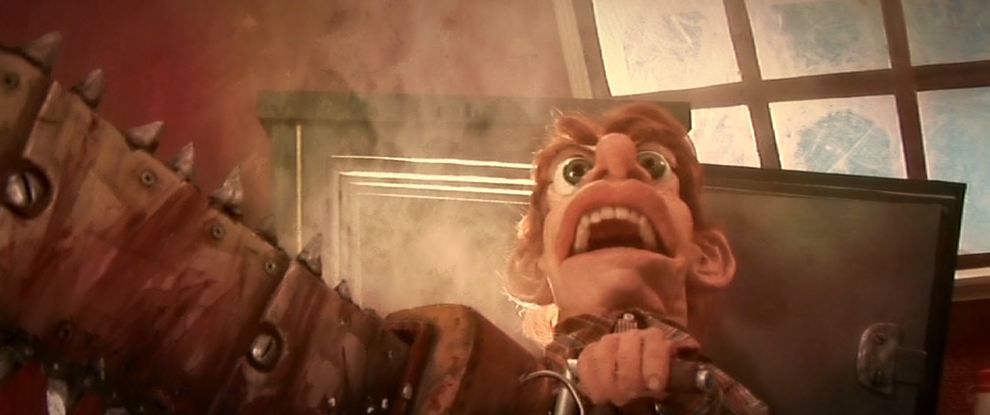
The zombie sub-genre remains popular of course (which partially accounts for this abundant harvest of flesh-eating variants) and it still occasionally but regularly supplies interesting material; yet one can’t help but be aware of the poverty of imagination which ultimately lies at the root of the ubiquity of the phenomenon. Yet, if there’s one interesting thing to comes out of a recent collection of zombie-based indies, released in the UK as a double-disc set by Monster Pictures (distributed by Eureka Entertainment), then it’s the set's inadvertent highlighting of the fact that the zombie sub-genre is actually capable of sustaining an incredibly wide selection of divergent approaches, and there are a spectrum of distinctions to be made, even within the indie movie bracket alone. Of course, the term ‘indie’ also covers a multitude of budgets and standards of professionalism, but rest assured -- everything included here meets a certain core level of competence (in other words, there’s nothing included in this set that is a complete insult to your eyes!), whether it be shot for tuppence on DV or aspires to widescreen cinematic standards of presentation. Across two discs, we’re given over five hours’ worth of zombie shorts from all over the world and in all sorts of styles, incorporating comedy, romance, action, satire and even the odd existential meditation. Although it’s an obvious PR line to take, there is indeed something here for everyone: if a particular short doesn’t happen to do it for you, then there’s every chance that the next one along will float your boat instead. The shooting standard ranges from grungy indie DV amateur style to comparatively glossy-looking fare. And there’s even a puppet animation zombie western here as well! The variety extends to running time, as we're given everything from brief five minute vignettes to hour-long mini features, with most entries averaging around fifteen minutes in length.

Dutch directing duo Barend de Voogd and Rob van der Velden demonstrate versatility even with the simplicity of their opener’s minimalist set-up: Zombeer (2008, Netherlands, 11 min) is an initially slick comedy short that highlights what happens when a bibulous brewer at a high-tech distillery keels over and drowns in a huge vat of his firm’s finest booze (‘beer with a bite’ is the company’s apposite tag-line!). Not only is the dead man (Rogier Schippers) reanimated by a secret mixture that’s being stirred-up in the bowels of the brewery, but everyone who samples it (which includes a party of Japanese day trippers) instantly becomes a flesh-craving revenant too. This quickie spans the gamut of the zombie sub-genre’s stylistic traits: starting off as a fairly proficiently filmed piece of work before moving into a (presumed) parody of [REC] by having most of the climactic zombie action shot as found-footage, viewed from the POV of the shaky camcorder of one of the fleeing visitors to the brewery.

Similarly, Zombies and Cigarettes (2009, Spain, 17min), also directed by a duo, Inaki San Roman & Rafa Martinez, takes the most familiar scenario imaginable – a zombie outbreak in a Spanish shopping mall which leads to a small group of survivors barricading themselves against the hordes – and uses it as something of a director’s show reel: it’s extremely well-shot and sharply edited, and it has gathered a raft of festival awards including some for best visual FX and best director. One can see why its flashy slickness would attract such attentions ... it may be the least original of any of the films included here, but it does at least attempt something interesting and new with the bitter-sweet cynicism of its conclusion, and the brief running time is perfectly judged for preventing it from outstaying its welcome. 

Zombies and Cigarettes (2009) Spain
Joseph Avery and Matt Simpson’s Plague (2008, UK, 17 min) heads for more obviously satirical waters in a grungy tale about an illegal migrant and gun-runner who flees the troubles of his Latvian homeland and winds up in a London that’s become overrun by the living dead. This sombre tale of urban isolation and despair makes fitting use of the zombie metaphor to examine the alienation, loneliness and persecution suffered by those forced to make a life for themselves in the jostling metropolitan sprawl that is contemporary London by removing the "jostle" and the "sprawl" and leaving only the apocalyptic decay of the aftermath of zombie plague. There’s one affecting and atmospheric scene in the middle of this piece which occurs when the narrator and protagonist investigates a derelict building, resulting in one of the most well-executed scare scenes to grace any of the films in the set.
 
Duncan Laing’s Bitten (2008, UK, 6 min) is another downbeat effort with an intriguing and disturbing premise. Here we join a young woman, played by Claire Wilson, in the middle of a zombie infestation and after she has just been bitten and is awaiting her own imminent transformation in the familiar surroundings of her home. Tense, ugly and grim, this is a fraught meditation on the prospect of the loss of one’s own faculties -- a situation which, frankly, will face us all in some form or other eventually. It combines gruelling body horror with a thought-provoking contemplation of mortality, and is only let down by poor "pancake" zombie face make-up, which rather breaks its spell. Another low budget effort, Arise (2010, USA, 18 min), attempts to excuse its own shoddy splatter effects with recourse to a facetious line in silly humour. The annoyingly cliched Death Metal soundtrack and the deliberately bad gore which accompanies all the "action" throughout risks losing the goodwill of the viewer fairly quickly, but this does actually have a thoughtful payoff about parental responsibility and maturity behind a long line of suppurating zombie cadavers shuffling forth to be deprived of limbs when the hero’s proficiency with his work tools finds another use after the living dead invade his workshop. Not Even Dead (2009, USA, 5 min) examines the misguided urge to hang on to a loved one and hope that a cure can eventually be found for the zombie infection: David (Joseph Will) keeps his zombified wife(Treva Tegtmeier) chained up in the basement and illegally feeds her, convinced there is still some remnant of the woman he used to know preserved inside the salivating creature’s brain. This is a bleak little tale about the catastrophic repercussions of irrational, undying love. Unfortunately, well-enough staged as it is, it just doesn’t go anywhere you don’t already expect it to go to.

 
Bitten (2008) UK
Randy Smith’s Fear of the Living Dead (2009, USA, 16 mins) is a cheaply shot attempt to do action and mystery with a small cast and a tiny budget and never really gets convincingly off the ground. April Campbell plays a young woman who believes she is the last woman left on Earth thanks to her immunity to the zombie virus, which has turned the rest of the world into flesh-craving ghouls. However, while raiding suburban houses for supplies she finds she isn’t the only remaining human being who's out and about after all. After becoming well-used to living in "survivalist" mode, this discovery becomes a difficult circumstance to adjust to. But she may well now be in even more danger than ever before. This is watchable enough as far as it goes, but it’s too slight and cheap-looking to pass muster as anything else but a minor quickie. Kidz (2010, Canada, 9 mins), on the other hand, is a delightful comic vignette in which a trio of child friends prove to be well-equipped for the death of their parents during a zombie plague because of their well-honed proficiency at shoot-em-up video games. Approaching the entire ordeal as just another game, they suit up as super-powered comic heroes and set about protecting the neighbourhood from the encroaching zombie hordes. Nicely acted by the young leads, this combines zom-com humour with a gentle evocation of the nostalgic joys of childhood fantasy and play.

Kidz (2010) Canada
 The Book of Zombie (2007, USA, 64 min) is, of course, the most substantial work here in terms of running time, and thus it’s no surprise that this is the one which most successfully manages to build up some degree of character interaction, which helps to create and hold on to viewer interest. A troubled married couple (Brian Ibsen and Larisa Peters) attempt to bond on Halloween night while their daughter is away having a sleepover with friends, but the evening is already going far from well for their relationship when the couple are suddenly assailed by zombie Mormons at their door who have taken over the small sleepy Utah town in which they live. As they battle through the streets to reach their daughter, they meet a couple of stoned and slightly vacant slacker youths working late in a local store, and the group attempts to hole up in a Medieval themed bar with a feisty waitress who’s got her zombie boss locked up in the store room. The conceit behind this gory comedy is that only Mormons are initially affected by the zombie infection, and they can only be stopped by exposure to caffeine (Mormons won’t touch anything that contains it, apparently), which is most readily available to our heroes in the form of soft drinks sold in the store they find themselves barricaded in (one character meets his end when his defensive can of Coke turns out to be of the decaffeinated variety!).

The Book of Mormon (2007) USA
 Andrew Loviska puts in a decent effort as the laconic, bespectacled slacker shop clerk Darwin, and Ibsen and Peters make their initially annoying bickering couple (who are gradually brought closer together over the urgent need to kick some serious Mormon zombie butt) more and more likable as the film proceeds towards its Evil Dead-style splatter-based finale. Not quite so likable in the comedy stakes is the British effort from Sat Johal, Tony Jopia and John Payne:  Zombie Harvest (2003, UK, 11 min) starts with someone tripping over while trying to escape from a zombie revenant by running through a farm, and ending up with their head stuck up a cow’s arse; things go pretty much downhill from there on. A few nice shots near the end, of a ghostly army of the re-animated dead shuffling, like rotted Fulci-esque cadavers, through a cornfield in the Oxfordshire countryside, is small compensation for this facetiously narrated tale which is told from the viewpoint of a soldier from a nearby American base, who’s on the turn after being attacked by a scientist who's been experimenting on himself with a genetic virus that has had some unforeseen consequences.  

The Skin of Your Teeth (2009, USA, 14 mins) is more a vignette than a fully-fledged short, and ends up leaving the viewer wanting more. But in terms of atmosphere and creepiness it’s by far the most successful piece included in this collection and is actually my favourite. Shot on a working farm in Western New Jersey by Dan Gingold -- a director/producer/editor based in Brooklyn, New York -- the film expertly uses landscape and space to create a mood of forboding which has a Cormic McCarthy-style sense of impending doom about it. The dialogue is kept to an absolute minimum and the set-up is conveyed visually, as we are introduced to a quartet of young survivors from a recent zombie plague taking refuge in a derelict farmhouse on the brow of a hill surrounded by a flat expanse of countryside. The group monitor emergency radio broadcasts for news and keep watch for the approaching hordes from the roof of the farm building using binoculars. The film vividly evokes a sense of dread relying on the featureless landscape as a means of emphasising the fact that there is nowhere to hide, and when the zombies eventually do come, the frantic battle for survival is by far the most visceral and scary out of this bunch of films because of this acrophobic feeling of the vastness of the countryside that the dead are seen to now dominate. Poor zombie makeup may slightly let the side down, but the last few minutes are the most terrifying out of any of the shorts here.
The Skin of Your Teeth (2009) USA
David M. Reynolds’ Zomblies (2009, UK, 47 minutes) is the other substantial work included in the set, with its TV episode-like run-time enabling a proper storyline to unfold rather than just the sketching out of a mood or the delivery of a set-piece. It’s steeped in the stylistic mannerisms and tone of 28 Days Later and its ilk, with shaky camerawork and digitally de-saturated colour tones ... but it sets up its dystopian world quite effectively and sells the action set-pieces it’s been designed to convey with conviction. There’s also quite an enveloping score accompanying this action and gore-drenched apocalypse. This is basically a ‘guys on-a mission’ film in which an elite squad of Rangers are sent out beyond the automatic-machine-gun topped wall, that provides a protective perimeter for a high-tech military base with a control room that looks like CTU from 24, in search of a rookie bunch of zombie hunters who have gone missing after leaving a distress call. The macho squad soon find themselves in trouble when it turns out that the zombie virus is mutating and can infect people even if they’re only exposed to the blood of one of the dead. There’s nothing wrong with this film other than the fact that it’s just a straight-down-the-line, low budget version of a typical zombie action film, with nothing new to offer. Performances are generally acceptable but characters, as tends to be the case with such material, are simply "types" and its hard to get more than casually engaged with the plight of the cookie cutter squad of military men who find themselves cornered and cut-off in a wilderness of marauding dead, as their superiors decide to cut their losses and bomb the whole area with their men still in it.
If it’s originality rather than straight-line thrills and action you’re after then look no further than the next offering: It Came from the West (2007, Denmark, 16 min) is an animated western created with hand puppets and directed by a 27 year-old student of the National Film School of Denmark called Tor Fruergaard. It tells the story of a freckle-faced, ginger-haired youngster with an overbite, called Virgil. Bulled by his oafish father and the mean guys who prop up the bar at his local saloon, who collectively dismiss him as nothing but “a wannabe cowboy weak pisser”, this plug-eared hero finds himself trapped between a rock and a hard place when the daily round of abuse he suffers at the hands of his daddy and his boorish friends is interrupted by a good ol’ zombie siege. A serial killer called the Dark Destroyer has been busy chain-sawing the local redskin population to death, and the natives decide to strike back by raising the dead in a sacred ceremony to take revenge on the white man. Before the bog-eyed-ugly cast of totem-faced cowboys have realised what’s going on, the Saloon is besieged by flesh-eating zombies freshly risen from a nearby graveyard and it’s up to Virgil to fend them off as the other patrons meet a variety of gory deaths at their undead hands. This humorous puppet adventure revels in outrageous cartoon gore, quirky characters and a great score that mixes tribal drumming and some extra twangy tremolo guitar licks.
It Came from the West (2007) Denmark
 Gregory Morinhas’ Paris by Night of the Living Dead (2009, France, 12 min) takes some stylish cinematography and cartoonish CGI splatter effects and combines them with fluid camera movement and vertiginous crane shots to make up this fast-moving action-fest, in which the dead take over the streets of a series of Parisian tourist destinations and only a handsome-looking, newly married young couple (Karina Testa and David Saracino) are available to fend them off when their wedding vows are interrupted by the zombie outbreak. This twelve minute piece is all about style, with the couple whipping off their wedding clothes in a trice and producing huge pump-action hand guns from nowhere (it’s always good to come prepared) before striking a series of action poses while variously either machine gunning, decapitating or otherwise eviscerating the staggering zombie crowds. The CGI is pretty low rent, but then that only adds to the cartoony artifice of the action, and despite the superficiality of it all, this manages a few tense moments and even a little poignancy at the end.
Paris by Night of the Living Dead (2009) France
Tarunabh Dutta’s Savages (2011, India, 39 min) is billed as one of India’s first independent zombie films and the imagery that comes with its interesting mixture of semi-rural/jungle locations is certainly different enough from anything seen in the other films included here to make this fairly cheaply-made effort stand out, although the influence of The Evil Dead and a few other classic Italian-made zombie films is always apparent. Unfortunately, the enthusiasm of the participants in front of and behind the camera is rather fatally undermined by the sheer amateurishness of the cast performances. This mostly just looks like a bunch of mates having a laugh with a video camera while they spend a weekend making their own zombie picture. The story, in which a group of teenagers idly amble off into India's equivalent of the backwoods on the outskirts of their village in order to give one of their number a special ‘treat’ by taking him on a camping trip to a contaminated area that’s been sealed off as a biohazard for years, requires said characters to behave with more than the usual quota of stupidity we expect to find distributed among the cast of zombie fodder flicks like this. There’s a dishevelled-looking ‘wise man’ who at first tries to warn them off and then, when that doesn’t work, resorts to martial arts skills to get rid of them; but by then it's already too late and one of the group gets infected with the zombie-inducing contaminate with predictably half-arsed results.
The final film in this collection, Dead Hungry (2009, UK, 10 min), is the surprise gem of the bunch and is probably best summed up by its tag line: ‘life’s a bitch, and then you die. Then you’re a zombie, and death’s a bitch too.’  The unfortunate protagonist of this little adventure is a forlorn-looking and very hungry revenant with a rumbling belly who’s in desperate need of fresh brains. Stumbling through a forest clearing, dressed in baggy dungarees, our “hero” encounters a number of classic clichéd zombie/horror movie situations but is too generally hopeless at being a member of the walking dead to capitalise on them. Basically, he’s just a little bit clueless when it comes to the business of eating people. Director William Bridges deals in a wry, poignant humour that closely resembles the attitude of Shaun of the Dead, but here it’s the hapless zombie we feel for, and his point of view we take throughout this ten minute film ... not  that of the potential victims he’s attempting to make a meal of. When the classic zombie siege situation develops after a bunch of American teenagers attempt to take refuge in an old log cabin, it is the poor old hungry zombie outside whose fortunes we’re actually following, as he continually gets crowded out by the other more pushy zombies surrounding the trapped kids' hideout, who are also attempting to break in. Eventually a quirky little ‘romantic’ relationship develops between "our" zombie and another female zombie who's also taking part in the siege -- and the ironic bittersweet ending takes the concept of funeral humour to  extremes!
Dead Hungry (2009) UK
As a collection, the films included in this Monsters Pictures release demonstrate the full range and the great versatility the zombie film is still capable of; and although a few of the entries merely deliver standard zombie flick fare, many others remind us how there is still more than a spark of life left in the genre’s shambling cadaver, should the more inspired indie writers and directors choose to search for it.  

RELEASING COMPANY: Monster Pictures/AVAILABILITY: Out Now/GENRE: Zombie Horror/FORMAT: DVD/REGION: 2 PAL/ASPECT RATIO: Various/DIRECTOR: Various/CAST: Various